
VIRMALAB
VirmaLab: Virtual Maintenance Workshop
Contact: Laurent Bouillaut.
Summary description and practical context
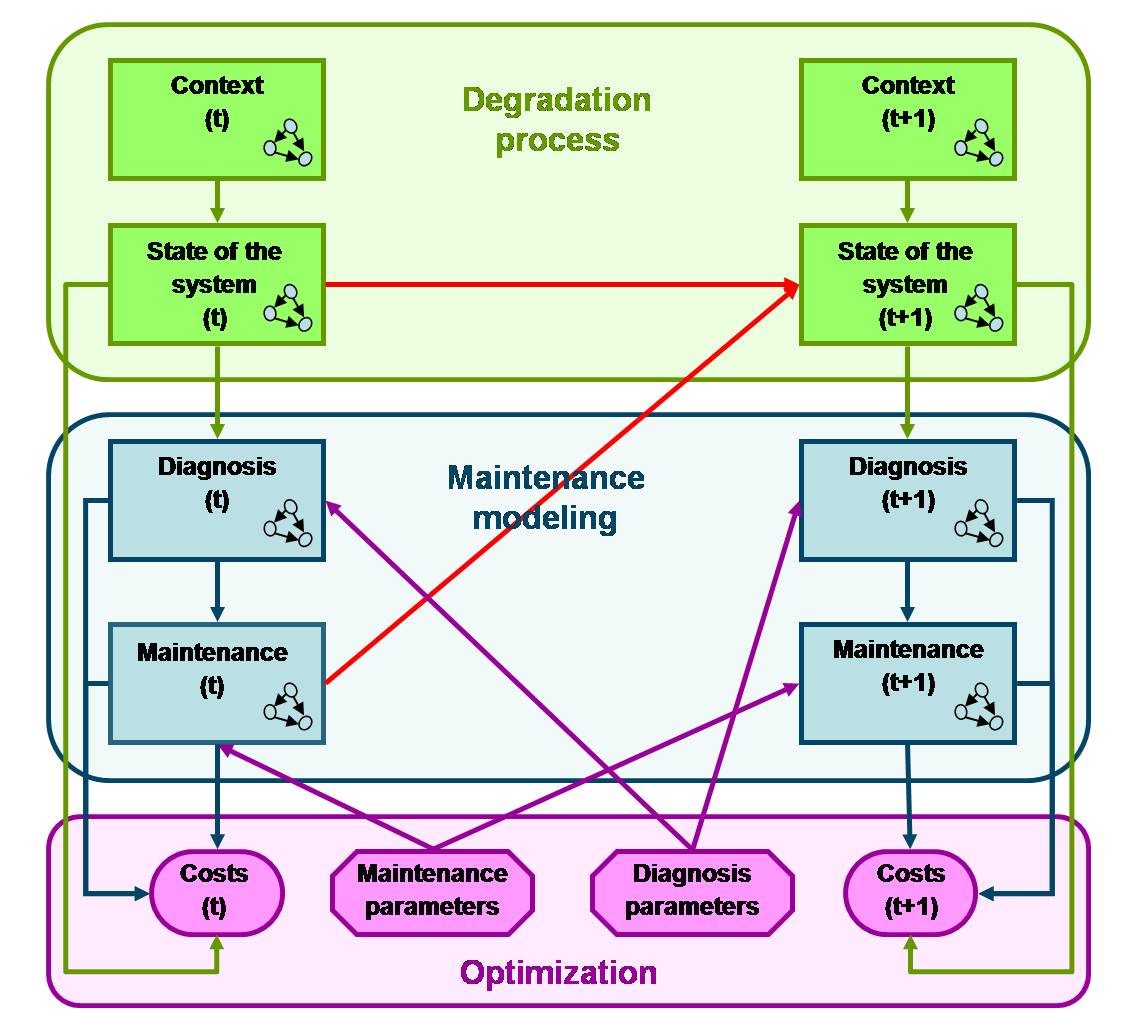
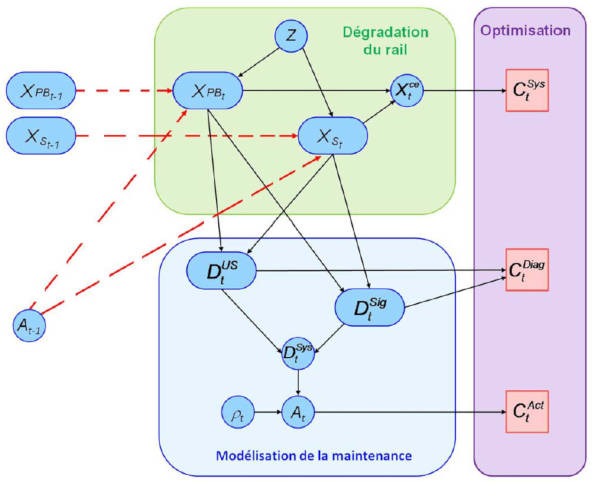
A tool for modeling both the lifetime distributions of critical systems and the Monitoring/Diagnosis process, with the aim of optimizing maintenance policies infrastructure managers for public transport networks.
The socioeconomic challenges associated with ensuring the safety of personnel and equipment, meeting environmental protection requirements and reducing pollution, and achieving productivity gains in increasingly complex systems place maintenance issues at the forefront of concerns in the context of optimizing industrial processes. Thus, assessing the technical reality and developing a maintenance strategy one that is not only corrective and preventive but also predictive (forecasting, diagnosing, and monitoring deterioration) constitutes a major scientific and technical challenge that must be addressed to improve processes and prevent risks. This is true in the transportation sector as in other industrial fields, and these issues are now of considerable importance, both because of the expected financial gains and the potential improvements in service quality and availability. The most significant consequence of current developments in railway infrastructure is linked to increased stress on the tracks (ever-higher traffic frequencies and speeds), rising axle loads, and the separation of infrastructure and rolling stock management on main lines.
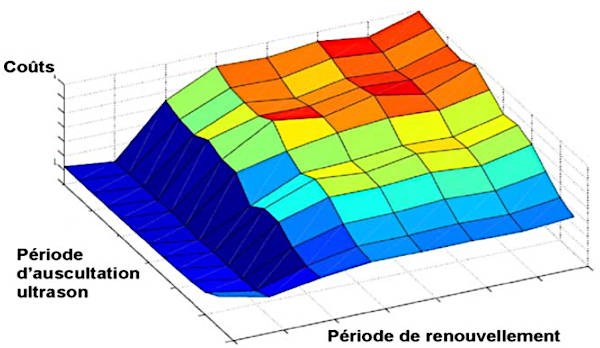
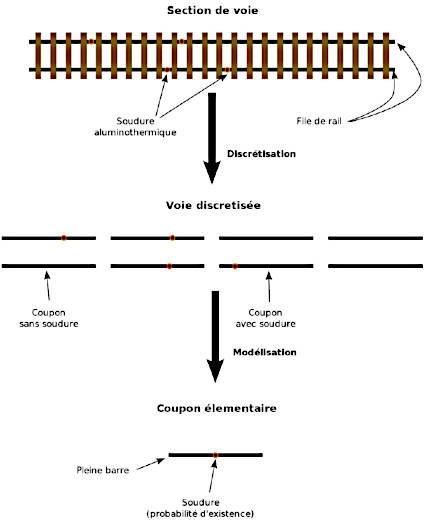
This development has given rise to new operational safety issues (one of the most critical being the prevention of rail breaks), and the search for optimal maintenance policies has become a pressing concern. The VirMalab approach aims at proposing decision support tool that help optimizing maintenance and monitoring parameters. It has been applied for several railway projects (mainly on infrastructure but also on rolling stocks).